What Are Dobby and Jacquard Fabrics?
Jul 09, 2025
In the textile industry, jacquard fabrics are highly favored for their intricate patterns and unique textures. Depending on the complexity of the patterns and the weaving techniques, jacquard fabrics are mainly divided into two types: dobby (small jacquard) and jacquard (large jacquard). They differ in terms of structure, weaving equipment, and applications.
What Is Dobby Fabric?
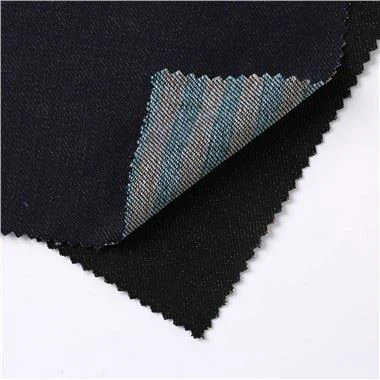
Dobby refers to a weaving technique that creates patterns on the fabric surface by combining two or more weave variations. Typically, a plain weave serves as the ground fabric, and a dobby loom controls the lifting of heddles to guide the warp yarns, forming delicate patterns on the fabric.

Weaving Process
Dobby looms use a dobby mechanism to control the lifting of heddles, usually managing up to 16 harnesses, which means a maximum of 16 warp yarn movement patterns can be achieved. Some imported looms can extend to 20 or even 24 harnesses, though these are less common. Due to the limited number of harnesses, dobby patterns are generally small. To create slightly larger patterns, the threading and lifting sequences must be repeated.
Pattern Characteristics
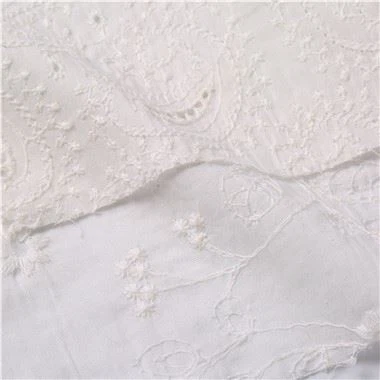
Dobby patterns are fine and well-defined, often featuring geometric designs, stripes, or small floral motifs. The smaller patterns give the fabric an elegant and refined appearance, making it suitable for high-end clothing, home textiles (such as bed sheets and pillowcases), and curtains.
Applications
Thanks to their delicate textures and efficient production, dobby fabrics are widely used in mid-to-high-end textile markets. For example, cotton dobby fabrics are commonly used for shirts and dresses, while silk or blended dobby fabrics are often chosen for luxury sleepwear and scarves.
What Is Jacquard Fabric?
Jacquard refers to large-patterned fabrics woven on jacquard looms, with the complete pattern repeat involving thousands of warp threads. The patterns are complex and highly dimensional. Jacquard fabrics often use one weave (such as plain or satin) as the ground and another to highlight the design. They can also incorporate different-colored warp and weft yarns to create multicolored patterns.

Weaving Process
Jacquard looms use pattern needles to control the lifting of warp yarns. For instance, a 1400-needle jacquard loom can manage up to 1480 needles, meaning it can simultaneously control 1480 warp yarn movement patterns. This allows for much larger and more intricate designs, such as landscapes, portraits, or large floral motifs.
Pattern Characteristics
Jacquard patterns are typically grand and luxurious, with strong dimensionality. By adjusting yarn materials, densities, and colors, various styles can be achieved, such as glossy satin motifs, embossed textures, or gradient effects with light and shadow.
Applications
Jacquard fabrics are primarily used in high-end home textiles (like bedspreads and upholstery), decorative fabrics (such as curtains and wall coverings), and luxurious garments like evening gowns and cheongsams. For example, silk jacquard fabrics are often chosen for evening wear due to their sheen and three-dimensional patterns, while cotton-linen jacquard fabrics suit classic-style curtains.
Differences Between Dobby and Jacquard
Pattern Size: Dobby patterns are smaller, while jacquard patterns are larger and more complex.
Loom Type: Dobby uses dobby looms, while jacquard requires jacquard looms.
Production Cost: Jacquard is more expensive due to its complex and time-consuming process.
Usage Scenarios: Dobby suits minimalist styles, while jacquard is ideal for luxurious decor.
Future Trends
With advancements in textile technology, jacquard fabrics continue to innovate. For example, digital jacquard technology combined with computer-aided design enables even finer patterns, while eco-friendly materials align with sustainable development goals. In the future, jacquard techniques will evolve toward personalization and functionality to meet diverse market demands.