Knowledge of Velvet Fabric
Jan 25, 2024
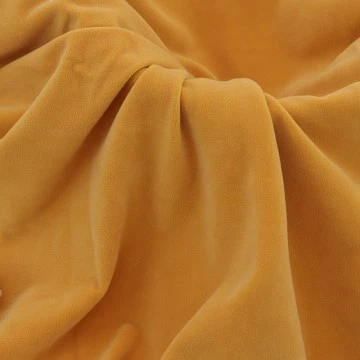
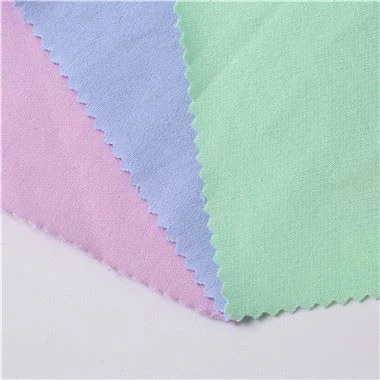
Velvet fabrics are made of high-quality cotton yarn, mainly available in solid colors, printing, jacquard and drawstring, yarn dyed, and distressed flower series. The raw materials include 80% cotton/20% polyester, 65% cotton/35% polyester, 80% polyester/20% cotton, as well as bamboo fiber/cotton velvet, and so on.
1. The raw material for velvet is grade A raw silk with 22-30 cocoons, and silk is also used as warp and cotton yarn is interwoven with weft. Use silk or artificial silk to pile up loops. Both warp and weft threads are first degummed or semi degummed, dyed, twisted, and then woven.
2.The weaving process can be roughly divided into three parts: velvet weaving, jacquard weaving, and velvet cutting.
3. Use a plush loom. The weaving machine is also divided into three parts: a velvet cart, a jacquard cart, and a velvet weaving cart. At least two people are required during weaving, one person is required to weave velvet, and the other person is required to board a jacquard cart about 2 meters high for jacquard weaving.
4. Its production process is very complex and meticulous: first, a set of circular steel wires or flat metal rods with grooves are used as plush rods, and then the warp and ground warp are arranged in a 2:1 ratio. The weaving ratio of the weft to the plush rod is 4:1 or 3:1, that is, a plush rod is inserted after every 4 or 3 weft yarns are woven. When weaving a pile rod, the entire pile warp or single or even pile warp is lifted to form a pile loop. After weaving about 10 meters, the fabric is taken from the loom and placed on the platform, and the plush rod is pulled out, forming a towering flat loop like loop.
5. Flower velvet is a process of removing the entire piece of woven fabric from the loom and placing it on a tabletop. The pattern is first printed and drawn on the surface of the fabric with white powder, and then a hard steel knife is used to scrape off the textured areas of the velvet ring (called carving) to form a fine and dense plush pattern. Then, a fuzzing rod is pulled out, and the uncut part remains in a circular shape, forming a uniform and tight velvet ring pattern. The fluff and loops complement each other, forming a distinctly shaped floral velvet.