Does Water-Repellent Treatment Affect Fabric Breathability?
Oct 28, 2026
Does a fabric automatically become stuffy and non-breathable once it has a water-repellent finish? Not necessarily. Water repellency and breathability are not completely opposed-what matters most is the type of water-repellent technology used.
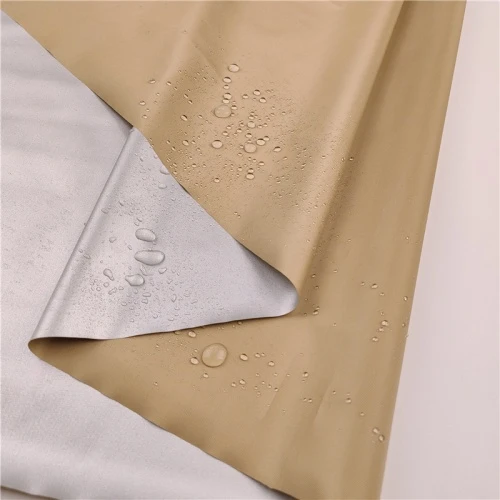
Fabric water-repellent treatments mainly fall into two categories: hydrophobic coating waterproofing and membrane lamination waterproofing. Traditional early waterproofing involved coating the fabric surface with a dense layer of rubber or thick resin, blocking a large area of the fabric's pores. This type offered strong waterproof performance, but it blocked the breathable channels between fibers, making it hard for moisture vapor to escape. As a result, the fabric felt stuffy and sweaty when worn, and breathability dropped noticeably. This is also the origin of the common impression that waterproof fabrics are not breathable.
Today's mainstream eco-friendly water-repellent treatments mostly use DWR (durable water repellent) finishes. DWR is a durable hydrophobic coating. Instead of filling the fabric's pores, it attaches to the fiber surface and changes the fiber's surface tension. Liquid rain forms beads and rolls off the fabric, creating a water-repellent effect, while the fabric's woven micro-pores remain intact. Water vapor from perspiration can escape normally through the gaps between fibers. Simply put, it blocks liquid water while letting water vapor pass. Cotton, polyester, and nylon fabrics treated with DWR generally do not experience a significant drop in breathability. They also feel softer and do not have a stiff, plastic-like hand feel.
However, water-repellent treatments do have a slight effect on fabric breathability. The coating thinly covers the fibers and inevitably narrows some pores. Breathability can decrease if the coating is applied too thickly, if it builds up after repeated washing and care, or if the fabric itself is very densely woven. It is also important to distinguish water repellency from full waterproofing: DWR only repels water, and prolonged heavy rain will gradually seep through. Truly storm-level waterproof fabrics are usually laminated with a waterproof breathable membrane, which allows water vapor to pass through tiny pores in the membrane. This process is more costly.
In everyday use, the breathability of water-repellent fabrics also changes over time. Long-term washing and oil or dirt buildup can damage the DWR coating. Water repellency decreases, but breathability may recover. If you want to balance water repellency and comfort, prioritize lightweight DWR-treated fabrics.