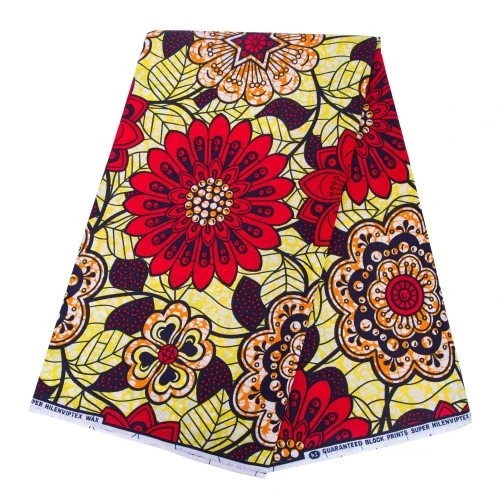
3 Major Trends for Wax Print Fabric Exports to Africa in 2026
Sep 15, 2026
Trend 1: Full Implementation of the Zero-Tariff Policy - Significantly Lower Costs
Starting May 1, 2026, China will fully implement zero tariffs on 100% of tariff lines for 53 African countries that have diplomatic relations with China. This is the largest tariff reduction measure aimed at a single continent in the history of China's opening-up.
Demand remains strong for essential product categories such as polyester fabrics, pure cotton printed fabrics, wax print fabrics, garments, and home textiles. The zero-tariff policy will directly reduce export costs and enhance the price competitiveness of Chinese wax print fabrics in the African market.
For buyers, this means they can source products of the same quality at a lower cost. For exporters, this means greater profit margins and stronger market competitiveness.
Trend 2: Continued Market Expansion - The Pie Is Getting Bigger
The global wax print fabric market is growing rapidly. In 2022, the global market size reached USD 5 billion, and it is expected to exceed USD 8 billion by 2027, with a compound annual growth rate (CAGR) of 9%.
Africa is one of the fastest-growing regions. Markets in countries such as Nigeria, Ghana, and Senegal are rising rapidly. The African printed and dyed fashion market is forecast to achieve a CAGR of 24.20% during the forecast period from 2025 to 2033. As a core category in Africa's fashion industry, wax print fabrics will directly benefit from this growth trend.
Trend 3: Quality Upgrading and Differentiated Competition - Low-End Products Will Be Eliminated
The African wax print fabric market is undergoing a quality upgrade.
In the early days, Chinese suppliers quickly captured the market through price advantages. However, as competition intensifies and consumer awareness improves, the market space for low-end imitation wax prints is shrinking, while demand for high-quality genuine wax prints continues to rise.
Successful suppliers are building differentiated advantages through the following approaches:
- Process upgrading: investing in R&D to improve the naturalness of wax crackle effects and overall product quality.
- Design innovation: conducting in-depth research on African culture and launching pattern designs that align with local aesthetics.
- Brand building: creating proprietary brands and establishing brand awareness and loyalty.
- Digital transformation: using AI-assisted design and data-driven market decision-making.
- Sustainable development: adopting eco-friendly dyes and sustainable production methods.