

What Are The Differences Between Woolen And Worsted Weaving Effects?
Jan 16, 2026
In the world of garment fabrics, woolen and worsted spinning are like twin brothers-both belong to the wool spinning family, yet they exhibit distinctly different textures and charms due to variations in production techniques. Many people are often confused by the common belief that woolen fabrics are warmer and worsted fabrics are more structured. Today, we'll break down the core differences in simple terms to help you choose wisely and avoid pitfalls.

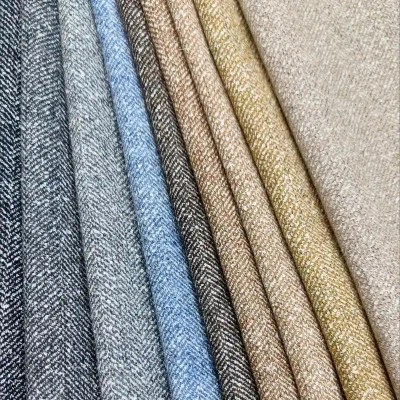
Woolen weaving fabric Worsted weaving fabric
The distinction begins at the yarn level. Woolen spinning uses thick single yarns with a lower degree of fiber combing, often retaining some short fibers, resulting in a loose, porous yarn structure. In contrast, worsted spinning involves multiple stages of fine combing, removing short fibers before spinning into high-count, two-ply yarns that are fine, compact, and uniform. This difference directly affects the fabric: woolen fabrics, due to their loose yarns, develop a characteristic full, dense surface with fine fuzz that often obscures the weave pattern. Worsted fabrics, on the other hand, feature neat, fine, and clear weave patterns with a smooth, mirror-like finish.
Touch is the most intuitive way to distinguish between the two. Woolen fabrics are dense and thick, feeling like touching a cloud-their fuzz provides a strong sense of warmth and coziness, offering ample elasticity without stiffness. They are commonly used in winter coats and scarves. Worsted fabrics represent the refined type: soft and smooth to the touch yet crisp and structured. When pinched and released, they show almost no creases and bounce back quickly, making them ideal for tailored garments like suits and dresses that require a polished silhouette.
In daily wear, the two fabrics suit different scenarios. Thanks to their warmth and fluffy texture, woolen fabrics are the go-to choice for outdoor winter wear. Woolen coats and sweaters paired with scarves naturally exude a retro, relaxed vibe. Worsted fabrics, with their wrinkle resistance and premium texture, dominate business settings and spring-autumn fashion. The drape of a worsted suit or the delicate sheen of a worsted dress effortlessly elevates formal or semi-formal styles.
3-Second Quick Identification: Look at the weave, feel the texture, test the rebound.
- Fuzzy surface with obscured weave? It's woolen. Clear, smooth weave? It's worsted.
- Thick and warm to the touch? Woolen. Fine and crisp? Worsted.
- Visible creases when pinched? Woolen. Quick rebound with no creases? Worsted.
Understanding the differences between woolen and worsted fabrics not only helps you avoid buying the wrong material at a high price but also allows you to precisely match your styling needs. Next time you shop for clothing, try using these tips to make an informed choice-let fabric quality enhance your style!


