Is Washed Cotton Pure Cotton?
Dec 31, 2025
Is washed cotton pure cotton? Washed cotton is not equal to pure cotton; the distinction lies in process versus material. Many people confuse the two, primarily because they don't understand a key point: pure cotton is classified by material, while washed cotton is classified by its processing technique.
Pure cotton refers to fabric with a cotton fiber content greater than or equal to 95%, containing little to no other chemical fibers, and earns its reputation for being skin-friendly and breathable due to its natural material. In contrast, washed cotton is defined by its washing process. Its raw material can be pure cotton, a cotton blend (e.g., cotton plus polyester), or even, in rare cases, pure chemical fibers. Through special treatments like pre-shrinking, washing, and softening, it achieves a shape-resistant fabric with a naturally wrinkled texture.
Simply put, some washed cotton is made from pure cotton, but not all washed cotton is pure cotton. Similarly, pure cotton may not undergo the washing process. This is the fundamental distinction between the two.


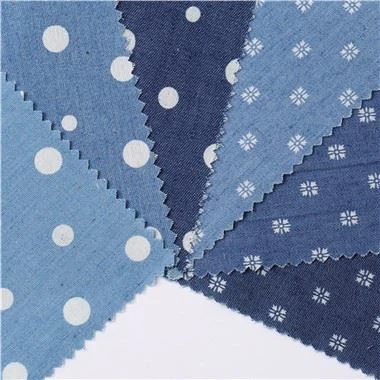
Pure cotton fabric Washed cotton fabric
Here's how to quickly differentiate them across three dimensions:
Hand Feel
Pure cotton fabric (unwashed) feels naturally soft with a fine, fibrous texture. When tightly squeezed and released, it wrinkles noticeably and recovers slowly. Washed cotton, having undergone processing, feels softer and smoother to the touch, resembling well-worn cotton items. It is warm and supple, with evenly distributed, vintage-like wrinkles that don't stiffen or pile up when released.
For example, a pure cotton T-shirt is crisp when new but softens and may lose shape after several washes. A washed cotton T-shirt is soft right from production, with textured wrinkles that appeal to those seeking a vintage aesthetic.
Durability
Pure cotton excels in comfort but has notable drawbacks: it tends to shrink, deform, may pill after repeated washing, and can become stiff when sun-dried. The washing process of washed cotton addresses these issues-pre-shrinking stabilizes dimensions, and washing softens the fabric while tightening the fiber structure. This makes it resistant to shrinkage, more durable against friction, and able to retain its shape after multiple machine washes, making it easier to care for.
For instance, pure cotton bed sheets may shrink by 2 to 3 cm after the first wash, while washed cotton sheets typically shrink less than or equal to 1%. If precise sizing is important, washed cotton is more suitable.
Price
The price of pure cotton depends mainly on cotton quality (e.g., long-staple cotton is more expensive than regular cotton), generally ranging from tens to hundreds per unit. Washed cotton pricing is influenced by both material and process-pure cotton washed cotton, with added processing costs, is typically 20 to 30 percent more expensive than regular pure cotton of similar quality. Meanwhile, blended washed cotton (cotton plus chemical fiber) may be cheaper than regular pure cotton due to lower material costs.
Shopping Guide:
Scenario 1: Underwear, Infant Products - Prioritize Pure Cotton or Pure Cotton Washed Cotton
Skin comfort and non-irritation are paramount for close-to-skin wear, where pure cotton's natural fibers excel. If you prefer a softer hand feel, opt for washed cotton products made from 100 percent cotton (labeled as such). If on a budget, regular pure cotton is sufficient-just wash gently in cold water, avoid direct sunlight, and prevent shrinkage and deformation.
Scenario 2: Bedding, Outerwear, Decorative Fabric - Washed Cotton Offers Better Value
Bedding requires a balance of comfort and durability. Washed cotton's wrinkle resistance and minimal shrinkage make it ideal, especially for spring and autumn duvet covers and pillowcases, where its textured wrinkles enhance a vintage bedroom vibe. For outerwear or curtains needing structure, blended washed cotton (e.g., 70 percent cotton plus 30 percent polyester) works well, retaining breathability while resisting pilling and being easy to care for-all at a more affordable price.
How to Identify:
Check the Label: Legitimate products specify fabric content and process. For example, 100 Percent Cotton (Washed Process) indicates pure cotton washed cotton. If only Washed Cotton is stated but the composition lists 100 percent polyester, it is pure synthetic fiber-don't mistake it for cotton.
Burn Test: Pure cotton burns like paper, with a woody or grassy smell, leaving behind grayish-white ashes that crumble easily. Washed cotton made from chemical fibers melts into hard beads when burned, emits a plastic-like odor, and leaves residues that don't crumble.