Viscose Vs. Polyester: What’s The Difference?
Sep 17, 2026
When you look at the care label while clothes shopping, almost everyone has seen "viscose" and "polyester," but many people can't tell the difference between them. Both are common, affordable fabrics: one is breathable and skin-friendly, while the other is durable and hard-wearing. Choosing the wrong one can leave you hot and uncomfortable-or dealing with stretching and pilling. This guide breaks down the core differences, pros and cons, and best uses of both fabrics so you can choose the right clothing with ease.
The core difference begins with the raw material, which is also the source of their performance differences. Viscose, also known as rayon and commonly called artificial cotton or cotton silk, is a regenerated plant fiber. It is made from natural cellulose materials such as wood pulp and cotton linters. Its composition is close to that of natural fabrics, making it eco-friendly and skin-friendly, and it has earned the title of a "breathable fabric." Polyester fiber-often simply called polyester-is a purely synthetic fiber and the most widely used fabric on the market. Made through chemical processes, it is known for durability and value for money.


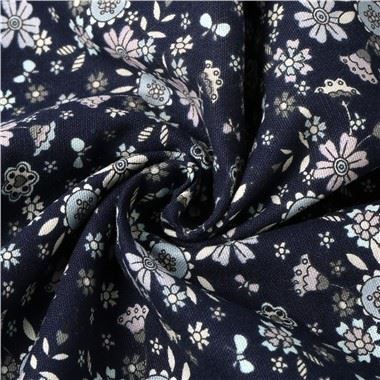
Viscose fabric Polyester fabric
Comfort and breathability versus a crisp, durable structure are the most noticeable differences in everyday wear, directly affecting both comfort and garment lifespan.
Viscose absorbs moisture and breathes far better than polyester. Its moisture regain is close to that of pure cotton, so it doesn't trap heat or stick to your skin when you sweat. It feels soft and smooth, has a gentle sheen, and offers a texture comparable to silk-making it ideal for spring and summer close-fitting garments. Polyester, by contrast, has extremely poor moisture absorption and weak breathability. In hot weather, it can feel stuffy and sweaty, and when worn next to the skin, it may feel sticky.
Polyester's biggest advantages are wrinkle resistance, abrasion resistance, and shape retention. It has strong elastic recovery, does not shrink easily or wrinkle after washing, and can be casually tumbled and dried while still keeping its shape. It is extremely easy to care for in daily life.
Viscose, on the other hand, has obvious drawbacks. Its strength drops sharply when wet, and it is prone to shrinking, losing shape, and stretching out. After repeated washing, it can look worn and wrinkled, with a loose shape that lacks a quality feel. Its abrasion resistance and stability are also relatively poor.
Viscose takes dye evenly and richly, with bright, vivid colors. It has a soft hand feel and excellent drape, making it flowing and graceful. Polyester has high color stability and is not easy to fade, but it feels somewhat dry, is stiffer, and lacks drape and flow.
How to Choose by Scenario: Avoid the Pitfalls
Choose viscose for: spring and summer dresses, shirts, pajamas, loungewear, and close-fitting base layers. If you want breathable comfort and a flowing texture, it is the top choice for light everyday wear.
Choose polyester for: sportswear, outerwear, trench coats, pants, commuter and workwear, and autumn/winter outerwear-garments that need a structured shape, durability, abrasion resistance, and low-maintenance care.
No fabric is better; there is only a more suitable choice. If you want comfortable, breathable, premium-feeling fabrics, prioritize viscose. If you want durability, toughness, easy care, and a structured shape, go for polyester. Once you understand the differences between fabrics, you can shop without mistakes and easily enjoy both comfort and quality.