
Our company was founded in 1999. The founder, Mr. Jia, has engaged in textiles for more than 30 years. The whole chain of textiles, the range from cotton purchase, spinning, weaving, to final product-garments, are all dabbled. This company was established initially committed to export fabrics, then expanded cotton yarn import and garment export business step by step. After so many years of accumulation, we have the stable suppliers and clients. Our operation principle is quality-oriented, customer first and the supremacy of credibility. Welcome to negotiate with us for a long-term and win-win business cooperation ralations.
-

Yarn-dyed fabric is made of dyed yarn.This characteristic make fabric colorfastness better than ordinary printed and dyed fabric,and it is more difficult to fade during the washing as well.
Add to Inquiry -
Yarn dyed poly cotton fabric is made of dyed yarn which contain polyester fiber and cotton fiber. The component content of raw material is 65% polyester 35% cotton and 50% polyester 50% cotton which
Add to Inquiry -
The two kinds of linen fabrics are showed in the picture are woven by dyed pure linen yarn.They are suitable for the production of shirts, coats, skirts and other clothing.
Add to Inquiry -
Poly blend yarn dyed fabric is made of dyed yarn which is blended by proportional polyester fiber and one or more other kinds of fibers.
Add to Inquiry



Why Choose Us
Quality Control
Our operation principle is quality-oriented, customer first and the supremacy of credibility. Welcome to negotiate with us for a long-term and win-win business cooperation ralations.
Factory
Our company was founded in 1999. The founder, Mr. Jia, has engaged in textiles for more than 30 years.
Rich Experience
We can provide our suggestion based on our experience once you need.We have inspector team with many years experience.
Professional Team
We can offer new product development assistance on our strength, regional advantage and full supply chain. We used to export printed plastic zip lock bags, printed board, shopping bags etc. at the request of clients.
Yarn-dyed fabric is a textile marvel that elevates the art of weaving. Unlike its piece-dyed counterpart, this method involves immersing individual yarns in dye before they are woven, resulting in vivid, long-lasting colors.
The distinctive process allows for intricate patterns and designs, creating a visual tapestry of depth and texture. This technique finds its roots in traditional craftsmanship, cherished for its ability to produce fabrics of exceptional quality.
Yarn-dyed creations adorn a spectrum of products, from elegant apparel to exquisite home textiles. In this fusion of technique and artistry, yarn-dyed fabric emerges as a testament to the enduring allure of textile craftsmanship.
Benefits of Yarn Dyed Fabric
Color Uniformity:
Yarn dyed fabric tends to have more uniform and vibrant colors, as each yarn is dyed individually. Regular fabric may have variations in color due to the dyeing process.
Patterns and Designs:
Yarn dyed fabric allows for intricate patterns and designs to be created, as the colors are applied to the yarn before weaving or knitting. Regular fabric may have simpler patterns or designs.
Longevity:
Yarn dyed fabric tends to retain its color and vibrancy for a longer period compared to regular fabric, which may fade over time with washing and wear.
Enhanced Color Fastness:
Yarn dyed fabric tends to have better color fastness, meaning that the colors are less likely to fade or bleed with washing or exposure to sunlight.
Unique Patterns and Designs:
Yarn-dyed fabric allows for the creation of intricate and unique patterns and designs, making it ideal for fashion and home decor applications.
High-Quality Appearance:
Yarn dyed fabric has a high-quality appearance due to its vibrant colors and patterns, making it suitable for a wide range of applications.
Type of Yarn Dyed Fabric
Common Types of Yarn Dyed Fabrics
There are several types of yarn-dyed fabrics, each distinguished by the type of yarn used, the weaving pattern, and the dyeing technique.
Gingham
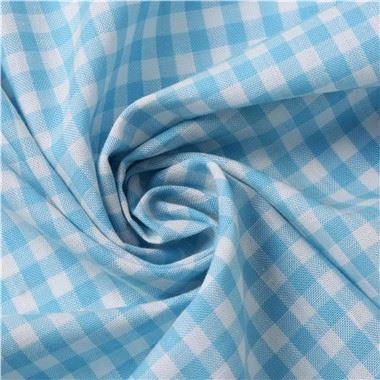
Gingham is a balanced plain-woven fabric, often made of cotton, with a checkered pattern formed by horizontal and vertical stripes of equal width. The checks can be of various colors and sizes.
Seersucker
Seersucker is a puckered cotton fabric that is woven in a way that causes some threads to bunch together, creating a wrinkled, textured effect. It is commonly used for warm-weather clothing due to its breathability.
Chambray
Chambray is a plain-woven fabric made of cotton, characterized by a white weft and a colored warp, resulting in a denim-like appearance. It is lightweight and often used for casual shirts and dresses.
Tweed
Tweed is a thick, rough-textured fabric often made of wool. It is known for its intricate, multicolored patterns and is commonly used for outerwear like jackets and coats.
Houndstooth
Houndstooth is a distinctive checked pattern characterized by broken, jagged checks. It can be found in a variety of fabrics, including wool, cotton, and synthetic blends.
Jacquard
Jacquard fabrics are characterized by intricate, multicolored patterns that are woven into the fabric using a special loom known as a Jacquard loom. These patterns can be quite elaborate and are often used for high-end textiles.
Tartan
Tartan is a type of woven fabric associated with Scottish culture, characterized by a pattern of crisscrossed horizontal and vertical bands in multiple colors. Each specific tartan pattern is associated with a particular Scottish clan.
Applications of Yarn Dyed Fabric
Apparel
Yarn dyed fabric is commonly used in the fashion industry for clothing items such as shirts, blouses, dresses, and suits, due to its vibrant colors and unique patterns.
Home Decor
Yarn dyed fabric is also popular in home decor applications, such as curtains, upholstery, and bedding, as it adds a touch of luxury and sophistication to any room.
Accessories
Yarn dyed fabric is used to create accessories such as scarves, ties, and handbags, adding a pop of color and style to any outfit.
Industrial Applications
Yarn dyed fabric is also used in industrial applications such as automotive interiors and protective clothing, due to its durability and color fastness.
Material of Yarn Dyed Fabric
Cotton Yarn
Cotton is one of the most popular fibers used for making textile products due to its softness and breathability. It can be spun into different weights and textures, making it versatile enough for use in various applications.
Wool Yarn
Wool is another widely-used fiber that has excellent insulating properties while being lightweight. It can be spun into fine or thick threads depending on its intended use.
Silk Yarn
Silk has been prized as a luxury fabric since ancient times due to its lustrous sheen and smooth texture. Its strength makes it ideal for creating delicate yet durable garments like scarves or blouses.
Linen Yarn
Linen fibers are derived from flax plants’ stems, resulting in strong yet breathable fabric that becomes softer with each wash cycle. Blended Yarns: Blending two or more fibers together creates blended yarns that combine their unique characteristics such as durability (wool) with softness (cotton).
Manufacturing Process of Yarn Dyed Fabric
Yarn Selection:
The process begins with the careful selection of yarn. Natural fibers like cotton, linen, or silk, as well as synthetic fibers such as polyester, can be used. The choice of yarn significantly influences the texture and appearance of the final fabric.
Dyeing the Yarn:
Unlike piece-dyed fabrics, where the fabric is dyed after weaving, yarn-dyed fabrics involve dyeing the individual yarns before weaving. Yarns are immersed in vats of dye, allowing the color to penetrate and saturate the fibers thoroughly. This step ensures that the color is ingrained in the very structure of the yarn.
Drying:
After dyeing, the yarns are carefully dried to set the color. This can be done through various methods, including air-drying or using specialized machinery. Proper drying is crucial to prevent bleeding or uneven coloring in the final fabric.
Yarn Arrangement:
The dyed yarns are then organized according to the desired pattern. Whether it’s a classic stripe, check, or intricate design, the arrangement of yarns on the loom is a critical step. Precision is key to achieving the intended visual effect.
Warping:
The dyed and arranged yarns are then warped onto the loom. Warping involves creating a parallel set of yarns, providing the foundation for weaving. Each yarn is meticulously placed in the correct sequence to ensure the pattern is woven accurately.
Weaving:
The warp yarns are interlaced with weft yarns to create the fabric. The loom is operated with precision to produce the desired weave pattern. This step requires skill and attention to detail, as any error can alter the final appearance of the fabric.
Inspection:
Quality control is a continuous process throughout manufacturing. After weaving, the fabric undergoes a thorough inspection to identify any defects or inconsistencies. This step ensures that only the highest-quality yarn-dyed fabrics make it to the market.
Finishing:
Post-inspection, the fabric undergoes finishing processes to enhance its characteristics. This may involve treatments for softness, durability, or sheen, depending on the intended use of the fabric.
Caring for Yarn Dyed Fabrics
However, to maintain the beauty of these fabrics, it is essential to take proper care of them. Here are some tips on how to care for your yarn-dyed fabric:
Always read the care label: The first step in caring for any fabric is reading its care label instructions carefully.
Wash with similar colors: To prevent color bleeding or fading, always wash your yarn-dyed fabric with similar colored items.
Use a gentle detergent: Harsh detergents can damage the fibers and cause discoloration over time; therefore, use a mild detergent while washing.
Avoid high heat settings: High temperatures can shrink or damage yarn dyed fabrics; hence it’s best to avoid hot water and high-heat dryer settings when laundering them.
Store properly : Store your finished projects made from yarn dyed fabrics in cool dry places away from direct sunlight as exposure may lead to fading over time.

When to Style Yarn Dyed Fabric?
While you might think that yarn dyed fabric is best suited for winter garments, it can actually be used for clothing all year round! The key to using this type of fabric successfully is to choose the right weight and style of garment for the season.
Look for fabrics that are made with natural fibers like cotton or linen, which will help keep you cool when the temperatures start to rise.
In the fall and winter, opt for heavier yarns like wool or cashmere to create cozy sweaters, jackets, and scarves. No matter what time of year it is, yarn dyed fabric can add a unique touch to your wardrobe.
Some yarn dyed checks or stripe fabric produces amazing summer wear for any beach or pool party. Whereas some heavy weight fabric may produce thicker clothing that are perfect for your winter wear.
Gsm of your clothing will determine if it can be used in used in cold weather or will be a perfect match for your summer outing.
Identifying yarn-dyed fabric can be done by examining the fabric closely and looking for specific characteristics. Here are some ways to identify yarn-dyed fabric:
Check the Front and Back: Yarn-dyed fabric often exhibits the same or very similar color on both the front and back sides. This is because the yarns used in the fabric are dyed before weaving or knitting, ensuring that the color penetrates throughout the yarns.
Examine the Edges: Look at the cut edges of the fabric, such as the raw or selvedge edges. In yarn-dyed fabric, the color will be consistent from the face to the edges, indicating that the yarns themselves were dyed.
Inspect the Reverse Side: Flip the fabric over and observe the reverse side. In yarn-dyed fabric, you will see the same pattern or design as the front side, but in a reversed orientation. This is because the yarns were dyed before weaving or knitting, creating a consistent pattern throughout the fabric.
Consult Fabric Information: Check the fabric label or consult the manufacturer’s information. Yarn-dyed fabrics are sometimes explicitly mentioned or labeled as such. However, it’s worth noting that not all fabric labels may specify the dyeing method.
By combining these visual observations and considering the characteristics of the fabric, you can make an informed judgment about whether a fabric is yarn-dyed or not. It’s important to note that some fabrics may have a combination of yarn-dyed and piece-dyed sections, especially in complex designs or fabrics with multiple colors.
Our Factory
Our company was founded in 1999. The founder, Mr. Jia, has engaged in textiles for more than 30 years. The whole chain of textiles, the range from cotton purchase, spinning, weaving, to final product-garments, are all dabbled.

FAQ
As one of the leading yarn dyed fabric suppliers in China for over 20 years, we warmly welcome you to buy or wholesale yarn dyed fabric for sale here from our factory. All customized products are with high quality and competitive price. Contact us for quotation and free sample.
100 linen fabric yarn dyed check, Oxford Fabric, Yarn Dyed Poly Cotton Fabric