What Are The Characteristics And Uses Of Modal Fabrics?
Jan 08, 2024
Modal fiber is a cellulose fiber, which is pure man-made fiber like artificial cotton. It is made from wood pulp produced from European shrubs and processed through specialized spinning techniques. Modal products are mostly used in the production of underwear due to their excellent softness and moisture absorption, but their fabric stiffness is poor. Modal can also demonstrate its wearability in the weaving process of woven fabrics, and can be interwoven with yarns from other fibers to weave various types of fabrics. Modal products have broad development prospects in modern clothing and apparel.
Modal's knitted fabrics are mainly used for making underwear. However, modal has a silver white luster, excellent dyeing ability, and a bright color after dyeing, which is enough to make it for outerwear. Because of this, modal has increasingly become a material for outerwear and decorative fabrics. In order to improve the poor stiffness of modal products, it can be blended with other fibers and achieve good results. The blended fabric woven with this type of yarn makes the cotton fibers smoother and improves the appearance of the fabric.


Main features:
1. The raw material of Modal fiber comes from natural wood and can degrade naturally after use.
2. Modal fiber fineness is 1 dtex, while cotton fiber fineness is 1.5-2.5 dtex and silk fineness is 1.3 dtex.
3. Modal fiber is soft, smooth, and has a bright color. The fabric has a particularly soft feel, and the surface is glossy and bright. Its drapability is better than that of existing cotton, polyester, and artificial cotton, it is a natural mercerized fabric.
4. Modal fiber has the strength and toughness of synthetic fibers, with a dry strength of 3.56cn/tex and a wet strength of 2.56cn/tex. The strength is higher than that of pure cotton and polyester cotton, which reduces the phenomenon of breakage during processing.
5. The moisture absorption capacity of Modal fiber is 50% higher than cotton fiber, which makes Modal fiber fabrics to remain dry and breathable. It is an ideal close-fitting fabric and health clothing product, which is beneficial for the physiological circulation and health of the human body.
6. Compared with cotton fibers, Modal fibers have good shape and dimensional stability, giving fabrics natural wrinkle resistance and heat resistance, making wearing more convenient and natural.
7. Modal fiber has good dyeing performance and remains bright and new after multiple washes, and has good color fastness. Compared with pure cotton, it is more comfortable to wear and does not have the disadvantages of easy fading and yellowing of pure cotton clothing. The cotton fabric is washed 25 times, the hand feel will become harder and harder. On the contrary, Modal fiber fabrics become softer and brighter as they are washed.
Main uses:
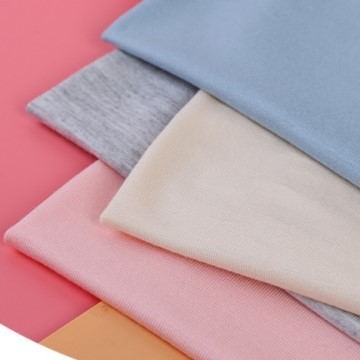
Modal fibers meet the requirements of ECO-TEX standards, physiologically harmless, and can be biodegradable. For textiles that come into direct contact with the body, it has special advantages, and fine denier fibers give knitted fabrics comfortable wearing performance, soft feel, flowing drape, charming luster, and high moisture absorption. Because of this, many warp and weft knitting factories have started using this fiber as a raw material to produce daily wear, pajamas, sportswear, and casual wear, as well as lace. When paired with other close-fitting clothing, this fabric has a particularly ideal effect, allowing your skin to maintain a dry and comfortable feeling frequently, even after cleaning, it can still maintain a certain degree of water absorption and softness, thanks to the smooth surface of the material, avoiding fiber entanglement during the cleaning process.