

Exploring Bamboo Fiber Spunlace Nonwoven Fabric
Oct 28, 2025
In the current global context where sustainable development is being promoted, are your businesses still using traditional plastic or non-woven materials, which have led to environmental pressure from consumers and the market? It's time to consider a revolutionary material that combines innovation, environmental friendliness, and practicality-bamboo fiber spunlace nonwoven fabric.
Why choose bamboo fiber? The inherent eco-friendly properties bestowed by nature
The core advantage of bamboo fiber stems from its natural and sustainable properties. Bamboo is one of the fastest-growing plants in the world and thrives without the need for pesticides and fertilizers. The cultivation process of bamboo inherently possesses strong carbon sequestration and soil conservation capabilities. Using bamboo as a raw material means that the environmental impact is reduced at the source level.
When bamboo is processed into fibers and then converted into nonwoven fabric using the hydroentanglement process, these eco-friendly advantages are perfectly preserved. The resulting bamboo fiber spunlace nonwoven fabric is not only biologically biodegradable, which helps reduce white pollution at its source, but it is also highly praised due to its potential low energy consumption and absence of chemical adhesives during production (the hydroentanglement process utilizes high-pressure water streams to entangle the fibers). This truly enables a green management approach throughout the entire lifecycle.
Going beyond environmental concerns
Natural antibacterial and antimicrobial properties: Bamboo contains a natural substance called bamboo quinone, which gives it long-lasting antibacterial, antimicrobial, and anti-mite properties. This provides an added layer of safety and health assurance for products that come into direct contact with the skin, such as beauty masks, makeup removal pads, personal care wet wipes, and so on.
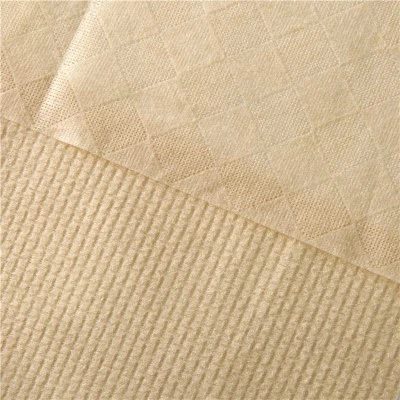
Extremely Soft and Skin-Friendly: The fiber structure of the bamboo fiber spunlace nonwoven fabric material is extremely fine, offering a texture that far surpasses many traditional nonwoven materials. The fabric produced from this material has the softness and smoothness akin to silk. For products such as baby wet wipes and high-end facial cleansing wipes, this exceptionally gentle touch can significantly enhance the user experience and elevate the product's quality.
Superior water absorption and breathability: The interior of bamboo fiber is densely packed with hollow, microscopic pores, which give it excellent moisture absorption, evaporation, and breathability properties. When used as medical dressings or cleaning cloths, it can quickly absorb liquids while maintaining a dry surface, facilitating wound healing or improving cleaning efficiency.
These characteristics, when combined, make the applications of bamboo fiber spunlace nonwoven fabric extremely diverse, ranging from healthcare and beauty care to household cleaning and eco-friendly fashion. It is quietly transforming product standards across multiple industries.
Empowering your brand
In a market environment where consumers are becoming increasingly discerning, the choice of material goes far beyond mere functionality, it also represents the transmission of brand values. The use of bamboo fiber spunlace nonwoven fabric implies the following for your brand:
1. Enhance brand image: Putting environmental commitments into practice to attract and win over a large customer base that is conscious of green consumption.
2. Enhance product competitiveness: Stand out from similar products by leveraging the selling points of naturalness, safety, and comfort, thereby creating higher added value for the product.
3. Alignment with policy direction: Proactively adapting to global trends in plastic restriction and circular economy policies, thereby ensuring a more stable and forward-looking path for the company's development.
The future market competition will undoubtedly be between green supply chains and the concept of sustainable development. The bamboo fiber spunlace nonwoven fabric is not just a material, it demonstrates with its capabilities that environmental protection does not need to come at the expense of performance, and that commercial success and social responsibility can coexist harmoniously.


